The Ugly Truth About Cheap Polymeric Sand in Interlock Joints
TC Contracting • September 16, 2026
Nothing ruins the curb appeal of a beautiful home in Elora like a stone driveway completely overrun with thick weeds and moss. Homeowners spend great money on high quality paving stones only to watch the joints wash out and fill with dirt after a few heavy rainstorms. The culprit is almost always the use of cheap polymeric sand during the initial build or a botched maintenance job. At TC Contracting we spend a lot of our time digging out these failed jointing materials to fix the mess left behind by budget contractors.
Professional interlock installations rely on premium joint sand to lock the entire surface together and keep the elements out. When installers cut corners to save a few dollars on supplies, the homeowner pays the price in constant weeding and shifting stones. Understanding how these products work and why the cheap stuff fails will help you protect your property. Here is the ugly truth about the sand sitting between your paving stones.
In This Article
- The Core Issue With Cheap Materials
- The Overestimation of Weed Blockers
- Recognizing Professional Grade Joint Sand
- Frequently Asked Questions
- Protecting Your Hardscape Investment
The Core Issue With Cheap Materials
Polymeric sand is simply fine sand mixed with chemical binder additives that harden when activated by water. The problem with bargain brand bags found at big box stores is the ratio and quality of those active polymers. Cheap products do not have enough binding agents to form a solid bridge between the stones. When it rains, the weak chemical bonds break down and the sand literally flows out of the joints and down your driveway.
→ From a professional standpoint: The cost difference between premium trade sand and cheap retail sand is microscopic compared to the labor required to fix a washout.
When that material washes away, it leaves an empty channel for water to travel directly down into your aggregate base. This water erosion is exactly what causes stones to sink and shift out of place over the winter. If you notice sand pooling at the bottom of your driveway after a storm, your jointing material has already failed.
The Overestimation of Weed Blockers
Many people assume that once polymeric sand hardens, it acts like an impenetrable concrete shield against all plant life. This is a massive overestimation of how the material functions in a harsh outdoor environment. Sand is meant to be slightly flexible so it can move with the natural expansion and contraction of the stones. When cheap sand cures, it tends to dry brittle and crack along the edges of the pavers.
→ A quick tip to remember: Seeds do not push up from beneath the pavers, they blow in from the top and root in the cracked joints.
Once a tiny crack forms, dirt blows in and creates the perfect nursery for weed seeds. The cheap polymers break down quickly under the sun, turning the joint back into ordinary loose sand within a single season. You cannot expect a budget material to fight off aggressive root systems when it cannot even hold its own shape.
Recognizing Professional Grade Joint Sand
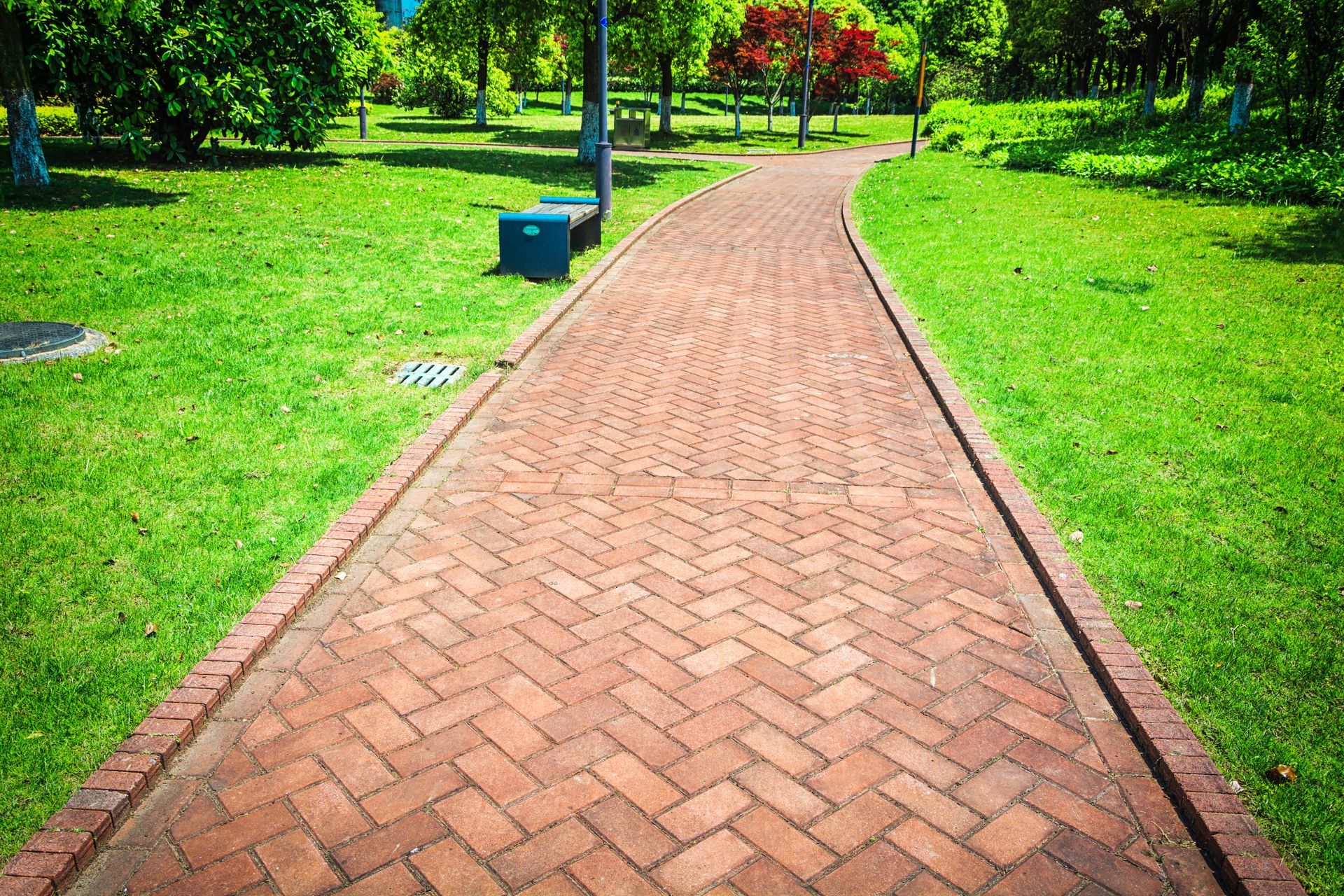
When our crews apply commercial grade sand to garden pathways design or a large driveway, the difference in the final product is obvious. High quality polymers activate quickly and cure to a firm consistency that feels almost like a heavy rubber gasket. It flexes just enough to handle the weight of vehicles and the shifting of the Ontario frost without breaking its seal.
Proper installation is just as important as the material itself. The sand must be vibrated deep into the joints using a plate compactor to remove all air pockets before any water is applied. A professional will also ensure the entire surface is meticulously blown clean of dust prior to activation, preventing a permanent milky haze from ruining the look of the stone.
Frequently Asked Questions
Why are weeds growing through my interlock?
Weeds root in the joints when the polymeric sand cracks, washes away, or degrades back into loose dirt. Wind blows organic soil and seeds into these empty pockets where water collects easily. If your stones were laid with regular play sand instead of a polymer mix, weeds will naturally take over the surface within weeks.
How often should you replace polymeric sand?
A high quality commercial sand installed correctly should last anywhere from five to ten years depending on weather exposure and traffic. If you use harsh deicing chemicals or have poor drainage routing water over the stones, the lifespan will drop significantly. You know it is time for a replacement when the joints sit noticeably lower than the edges of the stones.
Can I pressure wash my stone patio?
You can pressure wash paving stones, but using a high pressure zero degree nozzle directly on the joints will blast the polymeric sand right out of the gaps. Professionals use wide fan tips and surface cleaner attachments that clean the stone face without digging into the delicate jointing material. If you accidentally blast the sand out, you must wait for the area to dry completely before sweeping in a fresh layer.
Protecting Your Hardscape Investment
Dealing with constant weeds and washed out joints is frustrating, but installing the right materials permanently solves the problem. Knowing the difference between cheap fillers and commercial grade products helps you keep your outdoor spaces looking sharp. Contact our team to evaluate your current stonework and discuss how proper jointing sand keeps your property safe from erosion and overgrowth.
Share This Blog